.png)
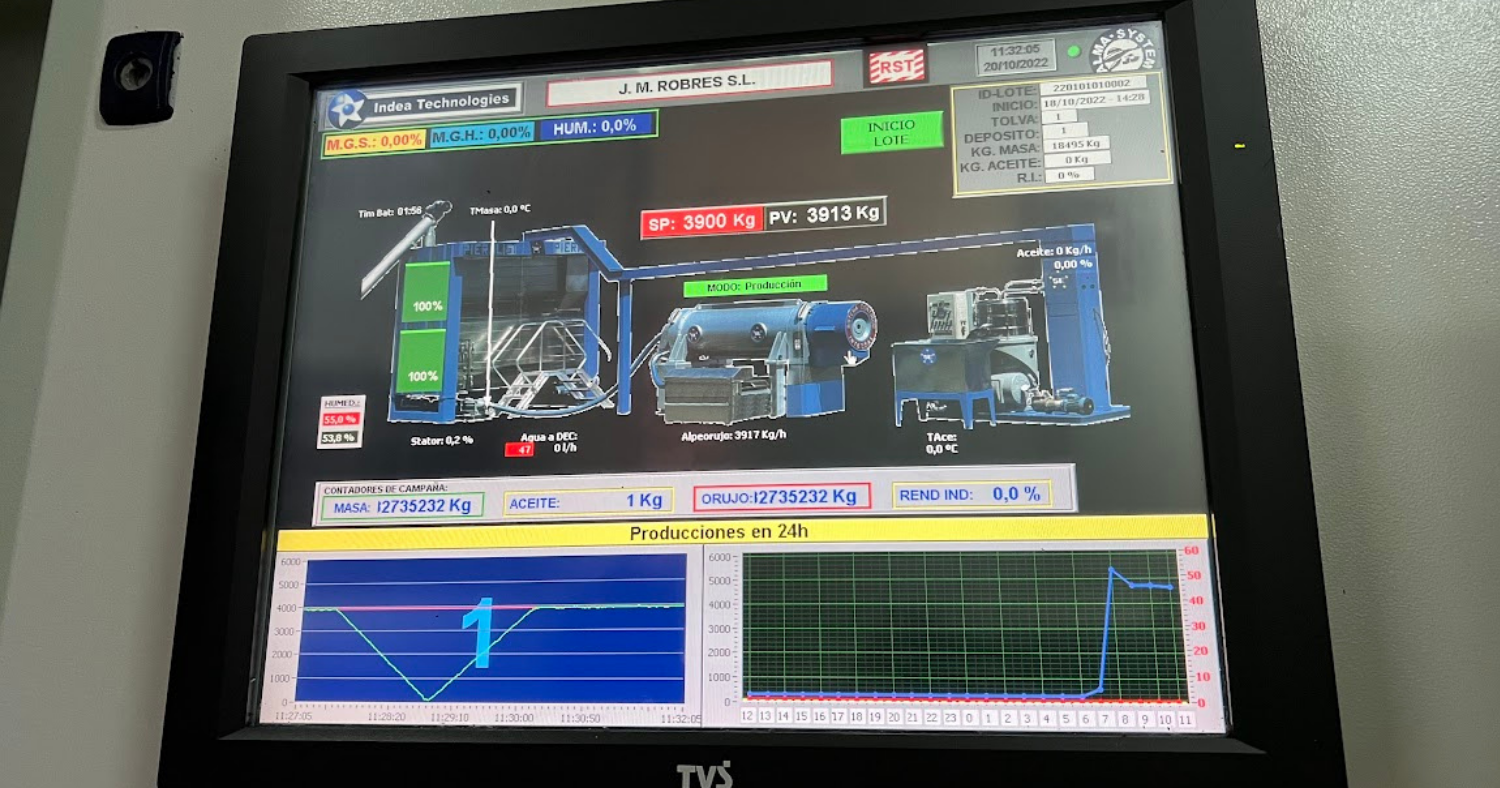
Source: ESAO image bank
The olive oil sector is undergoing a modernization process in which digitalization has become a key element.
Traditional management based on manual records and occasional controls is no longer enough to compete in a globalized market.
Today, digitalization of KPIs in olive oil mills makes it possible to measure, analyze, and improve EVOO quality accurately and in real time.
Mill masters and technicians who incorporate these digital tools achieve more efficient, profitable olive oil mills prepared to comply with international standards and EVOO quality objectives.
In addition, if you want to learn more about how to measure and optimize key indicators within an olive oil mill, you can consult this guide on EVOO Quality KPIs, where the main indicators used to control processes, improve EVOO quality, and increase competitiveness in the olive oil sector are analyzed.
1. Why digitalize KPIs in olive oil mills?
Key performance indicators (KPIs) are essential for evaluating quality and efficiency within quality control in EVOO production. Digitalization multiplies their usefulness by:
- Automatically recording critical data without relying on manual notes.
- Centralizing information on platforms accessible from anywhere.
- Detecting deviations immediately, preventing common EVOO defects.
- Facilitating audits and certifications, including EVOO quality audits.
- Comparing results between harvest seasons quickly.
Digitalization transforms data into strategic decisions and improves EVOO quality feedback.
2. Types of digital tools for KPIs
There are different solutions adapted to the needs of each olive oil mill and to process optimization:
- Connected sensors: measure temperature, oxygen, or humidity in tanks and EVOO extraction processes in real time.
- Quality management software: centralizes physicochemical, sensory, and process analyses to detect quality problems in EVOO production.
- Cloud platforms: allow remote access to KPIs from any device.
- Mobile apps: make it easier to record incidents, cleaning tasks, or daily controls, reinforcing hygiene in the olive oil mill.
- Digital traceability systems: integrate KPIs throughout the entire journey from the field to the bottle, including EVOO storage.
Each tool provides precision and agility in quality management, promoting technology applied to quality in olive oil mills.
3. Benefits for mill masters and technicians
Digitalization does not replace the experience of the mill master; it complements it, making olive oil mill master training essential:
- It provides objective data to confirm decisions.
- It reduces the risk of human error.
- It frees up time from repetitive administrative tasks.
- It improves communication with the team through shared information.
With digital tools, the mill master becomes a strategic quality manager.
4. Examples of digitalized KPIs
Digitalization of KPIs in olive oil mills makes it possible to continuously monitor key indicators within quality control in EVOO production such as:
- Milling time from harvesting.
- Mixing temperature and time during extraction.
- Dissolved oxygen in storage tanks.
- Energy consumption in different processes.
- Number of incidents recorded during the season.
This data is displayed in visual dashboards that facilitate fast decision-making and help prevent common EVOO defects.
5. International perspective
International markets particularly value digitalization as a guarantee of professionalism and transparency:
- In the U.S., FDA audits are easier to pass with clear digital records.
- In Northern Europe, distributors demand digital traceability and objective sustainability data.
- In Asia, importer confidence increases when digital data on quality and freshness is provided.
Digitalizing KPIs is also a commercial strategy.
6. Challenges in KPI digitalization
Not all olive oil mills progress at the same pace. The main obstacles are:
- Initial investment in sensors and software.
- Lack of training to interpret digital data.
- Resistance to change among teams accustomed to manual methods.
The key is to start gradually with basic tools and progressively expand the digital system.
7. How to implement digitalization step by step
- Define the most relevant KPIs for the olive oil mill (e.g., acidity, mixing temperature, oxygen in tanks).
- Select digital tools adapted to the size and budget.
- Train the team to use the technology and understand the data.
- Establish clear usage protocols.
- Review results periodically and adjust them according to needs.
A gradual implementation ensures that digitalization becomes a real ally.
8. The future of digitalization in olive oil mills
Technological advances will continue to provide new opportunities within technology applied to quality in olive oil mills:
- Use of artificial intelligence to predict defects or estimate yields.
- Blockchain to reinforce traceability transparency.
- Integration with energy management systems to optimize costs.
Digitalization is not a trend; it is the path toward a modern and competitive olive oil mill.
Digitalization of KPIs in olive oil mills makes it possible to transform quality management into a more agile, transparent, and effective process.
With it, mill masters and technicians can anticipate problems, improve profitability, and position themselves better in international markets while reducing quality issues in EVOO production.
Important note
This article is introductory. Practical implementation requires specific training and a plan adapted to each olive oil mill.
Request the free dossier: ESAO Executive MBA – Olive Oil Consultant