.png)
Source: ESAO Image Bank
Extra virgin olive oil (EVOO) is a highly prestigious product in global gastronomy, but maintaining its quality is not an easy task. A small mistake during harvesting, transport, or storage can lead to common defects in EVOO that affect both the flavor and the commercial value of the oil. These EVOO quality problems can compromise the profitability of a campaign if they are not controlled in time.
For an olive mill master or technician, having in-depth knowledge of EVOO defects and how to prevent them is essential to ensure a product of excellence. In this article, we review the most common defects, how to identify them, and which practical measures help prevent them, always within the framework of EVOO quality control.
If you want to go deeper into how to improve EVOO quality, you can find additional resources and practical recommendations here: improve EVOO quality.
1. What do we mean by EVOO defects?
According to international regulations (IOC and EU regulations), extra virgin olive oil must not present any organoleptic defects. In other words, any unpleasant aroma or flavor automatically downgrades it to virgin or lampante olive oil.
EVOO defects may be caused by:
-
Fermentation processes in the olives.
-
Oxidation during EVOO extraction or storage.
-
Contamination in the olive mill or storage tanks, usually linked to poor olive mill hygiene.
-
Improper handling during bottling or transportation.
Early identification allows processes to be corrected before the entire batch loses value, helping to meet the EVOO quality objectives of each campaign.
2. Most frequent sensory defects
Below are the most common defects that a technician must be able to recognize during sensory evaluation:
-
Muddy sediment: smell of fermented olives due to prolonged storage before milling.
-
Winey / vinegary: notes reminiscent of vinegar or acetic fermentation.
-
Musty-humid: caused by wet olives or fungal contamination.
-
Rancid: the result of oxidation, typical of poorly stored oils.
-
Metallic: unpleasant flavor caused by prolonged contact with iron or copper surfaces.
-
Cooked / burnt: when olive paste is overheated during extraction.
Each defect has a technical origin that can be prevented through proper protocols and regular EVOO quality audits.
3. How to detect EVOO defects: the role of technical tasting
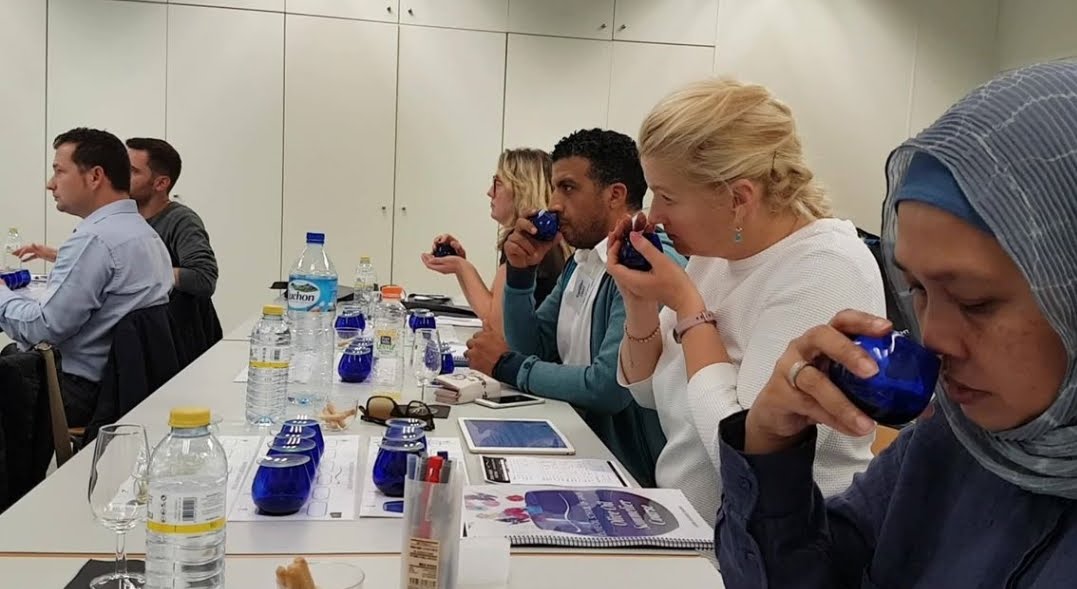
Sensory evaluation is the primary tool for identifying defects in EVOO.
Key elements for effective tasting:
-
Use of approved blue tasting glasses to avoid visual bias.
-
Temperature of 28 ºC to release volatile compounds.
-
Continuous training of the taster to recognize negative attributes.
The mill master or technician must complement tasting with physicochemical analysis. Today, many olive mills also integrate EVOO quality KPIs, traceability systems, and digitalization of KPIs in the olive mill, enabling real-time EVOO quality feedback.
4. Field prevention: harvesting and transport
Many defects originate before the olives even reach the olive mill.
Best practices:
-
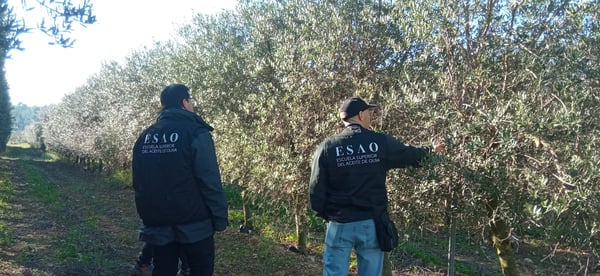
Early harvesting at the optimal ripeness stage.
-
Avoid using ground nets: only healthy olives picked directly from the tree.
-
Fast transport to the mill in ventilated crates, not closed sacks.
-
Avoid long waiting times before milling.
The guiding principle should be clear: “olive oil quality starts in the grove”.
Source: ESAO Image Bank
5. Prevention in the olive mill: critical processes
The olive mill is the heart of quality control.
Key measures:
-
Constant machinery cleaning to prevent contamination and ensure proper olive mill hygiene.
-
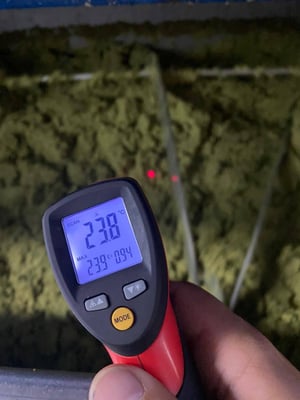
Temperature control during malaxation: never exceed 27 ºC to preserve positive attributes.
-
Immediate extraction after olive reception.
-
Use of suitable materials (stainless steel) to avoid metallic flavors.
A well-managed olive mill minimizes defects and allows optimization of olive mill processes, supported by technology applied to quality in olive mills and ongoing review of olive mill success KPIs.
Source: ESAO Image Bank
6. Oil storage and preservation
An excellent EVOO can lose quality if not properly stored. EVOO storage is key.
Best storage practices:
-
Stainless steel tanks with inert atmosphere (nitrogen).
-
Stable temperature control between 15–18 ºC.
-
Avoid light exposure.
-
Regular tank cleaning and maintenance.
The goal is to protect the oil from its main enemies: oxygen, light, and heat.

Source: ESAO Image Bank
7. Defects in bottling and distribution
Even if the olive mill does everything right, a bottling error can ruin the product.
Recommendations:
-
Use dark glass, tins, or opaque packaging.
-
Correct labeling with best-before date.
-
Proper storage and transport conditions (no excessive heat).
-
Stock control to avoid overly aged oils on the market.
Packaging is the last line of defense against oxidation and deterioration.
8. Quality control tools
Today, there are technologies that help technicians detect risks:
-
Digital traceability systems from field to bottle.
-
Rapid analysis of peroxide value and K270.
-
Temperature and humidity sensors in storage tanks.
-
Regular internal quality audits, essential within any EVOO quality audit.
The combination of sensory training and technical tools is the guarantee of success.
9. The importance of continuous training
The EVOO sector evolves rapidly. New regulations, extraction technologies, and consumer demands require mill masters and technicians to continuously update their knowledge. olive mill master training is essential to minimize errors and improve results.
Deep knowledge of EVOO defects is only the first step: the real difference lies in the ability to apply preventive measures at every stage of the production chain.
Identifying and preventing defects in EVOO is a strategic task to ensure quality, profitability, and prestige for an olive mill. From the grove to bottling, every detail counts to guarantee a defect-free product with maximum added value.
Important note
This article provides an introduction to EVOO defects. True specialization is achieved through training and real-world case studies.
In the ESAO Executive MBA – Olive Oil Business Consultancy, you will learn how to identify and prevent common defects in EVOO with technical rigor, combining theory and practice to improve processes in your olive mill.
Content developed by the teaching team of the Escuela Superior del Aceite de Oliva (ESAO), under the technical supervision of Susana Romera, Technical Director and Co-founder of ESAO.
Our associated expert faculty, with extensive international experience in the olive oil sector, is selected according to the topic and needs of each project, ensuring the highest level of quality, rigor, and practical applicability.