.png)
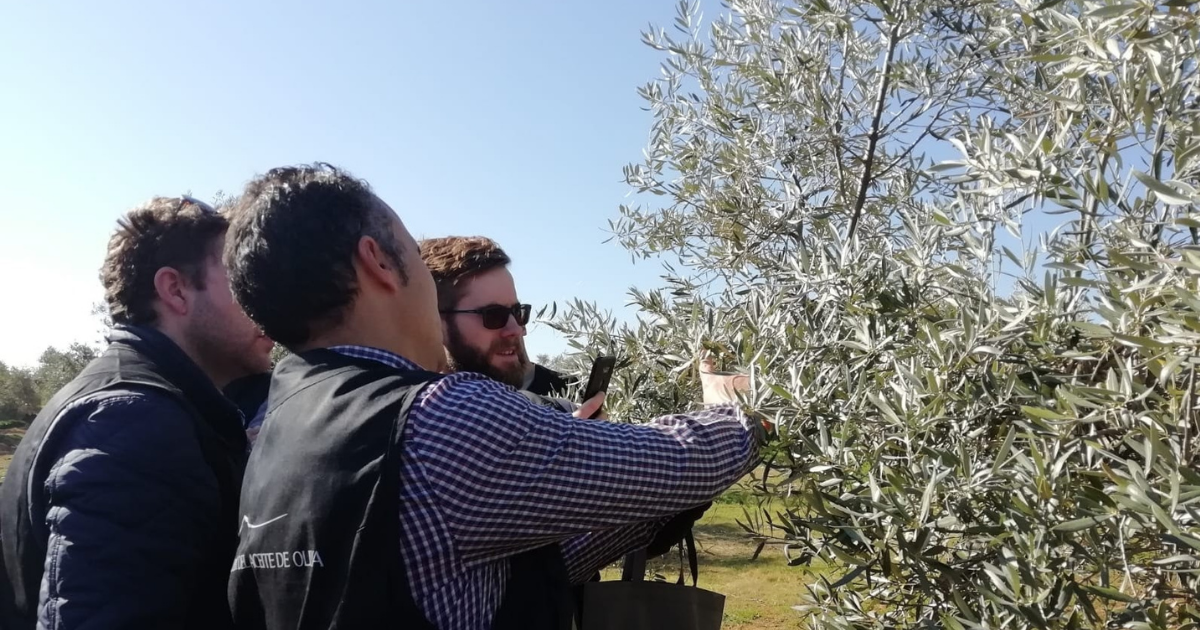
Source: ESAO image bank
The extra virgin olive oil (EVOO) sector stands out because of its quality, freshness, and authenticity.
However, achieving a consistent standard depends not only on the olives themselves, but also on the protocols applied at every stage of production.
For mill masters and technicians, implementing systems for Quality control in EVOO production is an essential step in guaranteeing a competitive product in national and international markets while preventing EVOO quality issues.
If you would like to explore this topic further, you can visit our guide to improving EVOO quality, where we analyze in depth all the factors influencing the final result.
1. What does quality control in EVOO mean?
EVOO quality control is the set of technical, organizational, and sensory measures that ensure every batch complies with legal requirements and consumer expectations. It is not only about avoiding common defects in EVOO, but also about maintaining consistent quality from one harvest season to the next through clearly defined EVOO quality objectives.
2. Benefits of a quality control system
Applying a structured system provides immediate advantages:
-
Ensures compliance with national and international regulations.
-
Facilitates obtaining certifications (ISO, IFS, BRC, organic).
-
Allows producers to anticipate EVOO quality issues.
-
Improves brand reputation and distributor trust.
-
Reduces financial losses caused by defective batches.
A solid system transforms quality into a competitive advantage and promotes process optimization in the olive oil mill.
3. Key stages of quality control
The system must be applied at every stage of EVOO production:
-
Olive grove and harvesting: farmer training, selection of healthy olives, early harvesting.
-
Reception at the olive oil mill: visual inspection and removal of damaged fruit, together with proper mill hygiene.
-
EVOO extraction: monitoring temperature and malaxation times, equipment cleaning.
-
EVOO storage: stainless steel tanks with inert atmosphere and controlled temperature.
-
Packaging and distribution: opaque packaging, proper labeling, and safe transport.
Quality is not controlled at the end of the process; it is built at every stage.
4. Tools for implementation
There are different resources that facilitate quality control in olive oil mills:
-
Physicochemical analysis: acidity, peroxide value, K232, K270.
-
Sensory analysis: systematic tasting to detect deviations and common defects in EVOO.
-
Written protocols for cleaning, maintenance, and food safety.
-
Digital traceability to track every batch from the olive grove to the bottle.
-
Internal audits and regular EVOO quality audits to verify compliance.
-
EVOO quality KPIs to measure and compare results from each production campaign.
Success lies in integrating technical tools with daily discipline.
5. The role of the mill master and the team
The olive oil mill master is responsible for coordinating and applying controls, but success depends on the entire team. Every worker must understand their role in oil quality and receive proper olive oil mill master training.
Examples:
-
The operator cleaning a conveyor belt helps prevent defects.
-
The technician monitoring malaxation temperature preserves aromas and polyphenols.
Quality is a collective task, not an individual one.
6. Documentation and records
A quality control system is only as strong as its ability to document what happens inside the olive oil mill.
Best practices:
-
Record temperatures, times, and process parameters daily.
-
Archive physicochemical and sensory analysis results.
-
Document incidents and corrective actions.
These records are the foundation for audits, certifications, and continuous improvement.
7. International perspective and certifications
International markets are increasingly demanding regarding quality control systems.
-
In the U.S., premium distributors require certifications such as USDA Organic or food safety audits.
-
In Northern Europe, full traceability and compliance with ISO or IFS standards are required.
-
In Asia, quality perception is directly associated with impeccable packaging and certified controls.
Having a documented system opens the door to international clients seeking guarantees of excellence.
8. Technology as an ally of quality control
Digitalization facilitates the implementation of robust systems:
-
Connected sensors monitoring oxygen and temperature in real time.
-
Digital platforms centralizing production data.
-
Management software integrating analysis, records, and traceability, driving digitalization of KPIs in the olive oil mill.
-
Technology applied to quality in olive oil mills helps reduce errors and improve decision-making.
Technology helps reduce human error and enables data-driven decision-making.
9. Common challenges in implementation
Not all olive oil mills have the same level of resources. The main challenges include:
-
Lack of specific staff training.
-
Resistance to change when adopting new methodologies.
-
Initial costs of certifications and audits.
The key is to see quality control not as an expense, but as an investment in profitability and access to new markets.
The implementation of systems for Quality control in EVOO production ensures that every bottle meets the highest standards, strengthening consumer trust and opening export opportunities. A mill master who masters this process turns quality into a tangible asset for the olive oil mill.
Important note
This article is a practical introduction. Real implementation requires training, discipline, and an approach adapted to each olive oil mill.
If you are interested, request the free dossier for the ESAO Executive MBA – Olive Oil Consultant.