.png)
-1.png)
Source: ESAO image bank
In the world of wine, every grape variety and region contributes unique characteristics to the glass. Exactly the same happens with extra virgin olive oil (EVOO). EVOO varieties and regions determine sensory profiles, intensities, and nuances that chefs and sommeliers must understand in order to select the right oil depending on the dish and the gastronomic experience they wish to create.
This article offers a practical introduction to differentiating EVOO varieties and regions, with examples illustrating how these factors influence EVOO in fine dining.
If you would like to learn more about how to Communicate the Value of EVOO in gastronomy, you can consult our complete guide on EVOO on your restaurant menu and its professional application.
1. The importance of understanding EVOO varieties
Each olive variety has its own sensory profile. Understanding these differences allows professionals to:
-
Select the most suitable oil for each recipe.
-
Communicate the Value of EVOO to customers through its origin and personality.
-
Create innovative and distinctive EVOO pairings.
-
Enhance professionalism both in the dining room and in the kitchen.
Understanding EVOO varieties and EVOO regions is not a minor detail; it is a key differentiating factor within EVOO in fine dining.
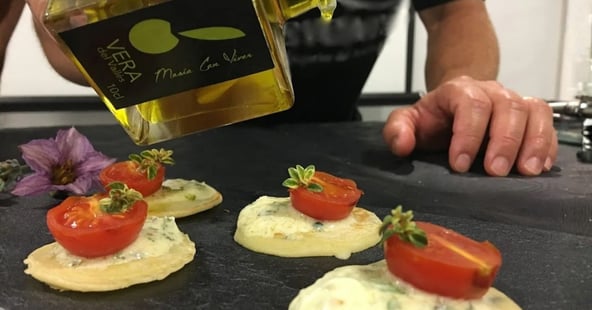
Source: ESAO image bank
2. Main EVOO varieties in Spain
Spain is the world leader in EVOO production and offers enormous varietal diversity. Some of the most representative varieties are:
-
Picual (Andalusia): intense, with olive leaf and green tomato notes. Strong bitterness and pungency. Ideal for red meats, stews, and robust dishes.
-
Arbequina (Catalonia, Aragon): smooth and fruity, with apple and banana notes. Perfect for fish, pastries, and delicate dishes.
-
Hojiblanca (Andalusia, Castilla-La Mancha): balanced, with herbal and almond nuances. Versatile, excellent for salads, pasta, and cheeses.
-
Cornicabra (Castilla-La Mancha): intense, with dried fruit notes and a bitter finish. Excellent with legumes and game meats.
Each variety contributes a sensory range that allows chefs and sommeliers to play with nuances and combinations within EVOO varieties and regions.
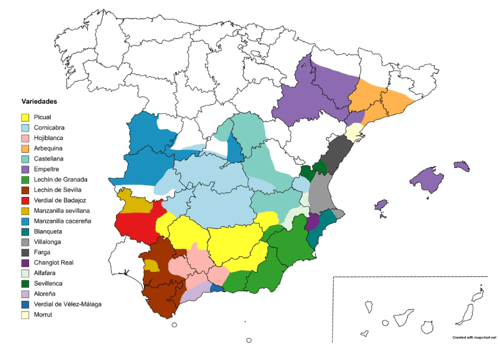
Source: Olive variety map – ESAO image bank
3. International varieties
Beyond Spain, other regions contribute recognized varieties that are increasingly gaining prominence in EVOO in fine dining:
-
Koroneiki (Greece): highly aromatic, fresh, and herbaceous, ideal for salads and vegan cuisine.
-
Leccino (Italy): smooth and balanced, excellent for fish and vegetable dishes.
-
Frantoio (Italy): medium fruitiness, with grass and floral notes, versatile in Mediterranean cuisine.
-
Chemlali (Tunisia): sweeter and lighter oil, commonly used in pastries and North African cuisine.
Exploring these international EVOO varieties and regions enriches a restaurant’s offering and opens the door to globally inspired menus.
4. Differences according to region of origin
Terroir also influences olive oil. Factors such as climate, soil, and altitude modify the sensory profile:
-
Andalusia: intense oils with strong character and high stability.
-
Catalonia and Aragon: smooth, delicate, and aromatic oils.
-
Central Italy: elegant, balanced, and highly fragrant oils.
-
Greece: fresh, herbaceous, and vibrant oils.
-
Portugal: complex oils with grass and dried fruit notes.
As with wine, the region gives personality to the oil and helps Communicate the Value of EVOO to consumers.
5. Comparative tastings to learn the differences
The best way to differentiate EVOO varieties and regions is through practice:
-
Taste oils from the same variety but different regions.
-
Compare different varieties from the same area.
-
Analyze early-harvest oils versus mature oils.
Learning how to taste premium EVOO allows professionals to identify nuances with greater precision.
Comparative tastings make it possible to appreciate subtleties and strengthen sensory knowledge.
6. Application in fine dining
Chefs and sommeliers can use this diversity of oils as a gastronomic resource:
-
Design menus in which each dish features a different olive oil variety.
-
Include EVOO on your restaurant menu as a differentiating element.
-
Offer EVOO tastings as part of the dining experience.
-
Communicate the Value of EVOO through the story of the variety and region as a gastronomic argument.
A menu featuring carefully selected oils brings sophistication and distinction to the restaurant.
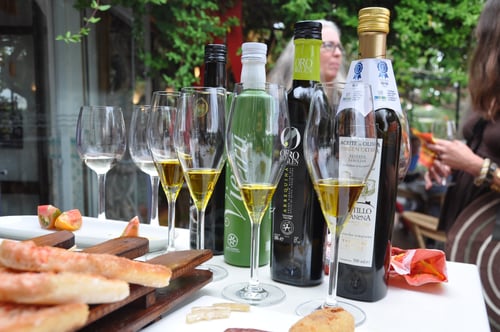
Source: ESAO image bank
7. International perspective
In global markets, diners increasingly value EVOO diversity:
-
In the U.S., consumers seek oils with a clear varietal identity.
-
In Asia, freshness and smooth notes are especially appreciated.
-
In Northern Europe, origin and regional traceability are decisive purchasing factors.
Adapting oil selections to each international market opens new gastronomic opportunities.
8. Common mistakes when differentiating varieties and regions
-
Believing that color indicates quality (a common myth).
-
Not paying attention to oil freshness.
-
Using the same variety for every dish.
-
Failing to communicate the importance of origin to customers.
Avoiding these mistakes helps maximize the diversity of EVOO varieties and regions.
Conclusion
Understanding EVOO varieties and their regions of origin is an essential resource for chefs and sommeliers seeking to stand out in EVOO in fine dining. Every oil offers a story, a sensory profile, and gastronomic potential that, when used correctly, makes it possible to Communicate the Value of EVOO and elevate the dining experience.
Important note
This article is introductory. To master comparative tastings, differentiate varieties, and apply this knowledge in the kitchen and dining room, specialized training is required.
In the ESAO Executive MBA – Olive Oil Consultant, you will learn to distinguish EVOO varieties and regions, design menus with differentiated oils, and Communicate the Value of EVOO professionally in the gastronomic sector.