.png)
Source: ESAO image bank
Key performance indicators (KPIs) have become essential tools for measuring and managing quality in the olive oil sector. In this context, KPIs for success in olive oil mills help producers objectively measure quality, efficiency, and decision-making across the entire production process. They also make it possible to identify common defects in EVOO, anticipate EVOO quality issues, and establish verifiable EVOO quality objectives.
Beyond theory, an increasing number of olive oil mills have transformed the way they operate thanks to these KPIs.
This article briefly and clearly presents practical examples of how the use of KPIs in olive oil mills has boosted quality, profitability, and confidence in international markets through the optimization of mill processes, improvements in EVOO storage, tighter control of EVOO extraction, and the implementation of stricter mill hygiene systems.
You can also consult our pillar content Essential KPIs to improve EVOO quality to explore this topic in greater depth.
1. KPIs as a driver of change in olive oil mills
KPIs make it possible to objectively measure physical, chemical, sensory, and management parameters. Many of them are directly linked to EVOO quality control, EVOO quality KPIs, and KPIs for olive oil mill success.
Experience shows that olive oil mills applying KPIs not only improve oil quality, but also operational efficiency and stability. Technology applied to quality in olive oil mills has also enabled systematic data recording through the digitalization of KPIs in the mill.
Without measurement, quality depends on perceptions. With KPIs, quality becomes tangible and verifiable.
2. Success story 1: reduction of sensory defects
A medium-sized olive oil mill began systematically tracking two KPIs: the time between harvesting and milling, and malaxation temperature. These indicators were directly related to common defects in EVOO and the prevention of EVOO quality problems.
Results after two harvest seasons:
-
40% reduction in batches with fermentation defects.
-
Increase in median fruitiness in extra virgin olive oils.
-
Greater oxidative stability, enabling expansion into Northern European markets.
This case shows how controlling just two key KPIs can make a significant difference thanks to improved EVOO quality feedback.
3. Success story 2: storage optimization
In a cooperative, storage tanks were equipped with oxygen and temperature sensors connected to a digital system.
Impact:
-
30% reduction in oxidation.
-
Oils with a better sensory profile at the end of the season.
-
Fewer complaints from international distributors.
Investment in technology to monitor storage KPIs translated into profitability and reputation, while providing a solid foundation for future EVOO quality audits.
4. Success story 3: improvement in internal management
A family-run olive oil mill decided to apply management KPIs: number of incidents recorded and percentage of batches achieving extra virgin category. This was part of a broader strategy focused on olive mill master training.
After one year of implementation:
-
The number of incidents was reduced by 50%.
-
90% of batches remained in the extra virgin category.
-
Internal organization improved thanks to clear records and defined responsibilities.
Management control through KPIs became a professionalization tool and enabled decisive progress toward EVOO quality objectives.
5. Success story 4: access to international markets
In an export-oriented olive oil mill, a comprehensive system of KPIs was implemented: physicochemical, sensory, and digital traceability indicators.
Results:
-
IFS and organic certifications obtained.
-
New contracts with distributors in Asia and the U.S.
-
Average oil price increased by 25%.
KPIs not only improved quality, but also strengthened the mill’s commercial capacity through better EVOO extraction, EVOO storage, and EVOO quality control.
6. Lessons learned from these success stories
From the experience of these olive oil mills, several common conclusions can be drawn:
-
Start with a small number of well-defined KPIs and expand them progressively.
-
Combine process, quality, and management indicators.
-
Support KPIs with staff training to ensure correct interpretation.
-
Turn results into practical decisions (adjust timing, improve mill hygiene, invest in technology).
The key is transforming data into concrete actions that generate continuous EVOO quality feedback.
7. The role of digitalization
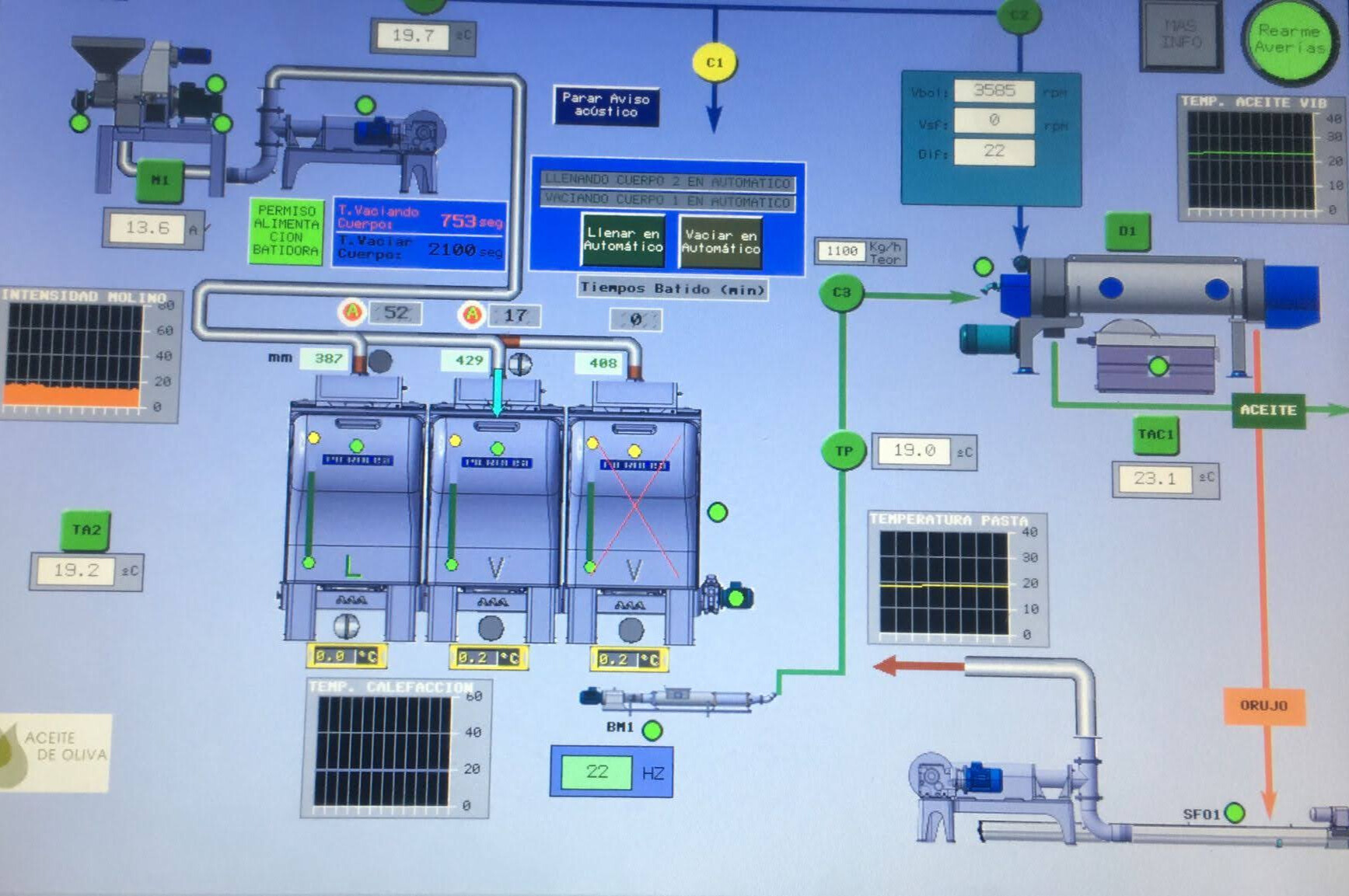
Most successful olive oil mills have incorporated technology to record and manage KPIs: connected sensors, quality management software, and cloud-based platforms.
Digitalization speeds up decision-making and increases transparency for distributors and external auditors, enabling much more efficient digital KPI management in the mill.
8. International perspective
In global markets, KPIs are a powerful commercial argument:
-
In the U.S., distributors value quality reports based on objective KPIs.
-
In Asia, clients seek fresh oils backed by data proving authenticity.
-
In Northern Europe, sustainability and digital traceability are decisive KPIs in negotiations.
Presenting documented KPIs improves an olive oil mill’s market position and facilitates external audits and EVOO quality audits.
Success stories from olive oil mills applying KPIs show that measurement is the first step toward improvement. Controlling process indicators, EVOO storage, sensory quality, and internal management not only ensures EVOO excellence, but also opens access to international markets and strengthens mill profitability.
Important note
This article is introductory. Implementing effective KPIs requires specialized training and adaptation to the reality of each olive oil mill, including improvements in process optimization, EVOO quality control, and proper management of EVOO quality KPIs.
Request the free dossier ESAO Executive MBA – Olive Oil Consultant to learn how KPIs can take your competitiveness and quality to the next level.
Authorship and review
Content developed by the academic team of the Olive Oil Business School (ESAO), under the technical supervision of Susana Romera, Technical Director and Co-Founder of ESAO.
Our faculty of associated experts, with extensive international experience in the olive oil sector, is selected on a personalized basis according to the topic and the specific needs of each project, ensuring the highest level of quality, rigor, and practical applicability.