.png)

Managing an olive oil mill is a complex task: it involves technology, people, product quality, and a medium- to long-term strategic vision. However, very often it is seemingly small details that make the difference between a profitable campaign and one that generates losses. Improving olive oil mill profitability requires working on olive oil mill operational efficiency, quality management in the olive oil mill, extra virgin olive oil (EVOO) traceability, and the professionalization of the olive oil mill.
In this article, we analyze five common practices that reduce olive oil mill profitability and show you how to correct them in order to improve EVOO quality, energy efficiency in the olive oil mill, and ensure a competitive extra virgin olive oil in the market.
If you want to explore in greater depth how to improve the modernization and profitability of your olive oil mill, you can consult our guide and success stories.
1. Failing to measure and monitor key performance indicators
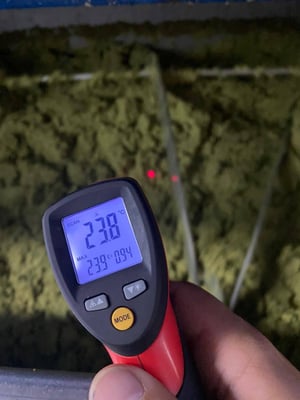
In too many olive oil mills, decisions are still made “by intuition.” Not recording KPIs such as oil yield, malaxation temperature, milling times, energy consumption, or percentage of losses generates invisible but constant losses. This lack of data leads to a low-profit olive oil mill.
Correction:
-
Implement a simple recording system (Excel, tablet, or olive oil mill digitalization software).
-
Establish daily monitoring using basic production indicators.
-
Train staff on the importance of recording and reviewing data.
With reliable data, you can optimize the olive oil mill, detect deviations in time, and make decisions that prevent significant economic losses. EVOO traceability is key to ensuring quality management in the olive oil mill and improving operational efficiency.
 Source: ESAO Image Bank
2. Processing poor-quality olives or processing them too late
Olive oil mill profitability does not depend only on producing more, but on producing better. A very common practice is processing damaged olives, delaying milling, or using poor transport and storage conditions. This results in lower-grade oils that are sold at much lower prices.
Correction:
- Define clear reception protocols (maximum time between harvesting and milling).
- Reject olives that do not meet basic quality standards.
- Raise awareness among farmers and cooperative members about the importance of early harvesting.
A lampante or defective virgin olive oil can represent a loss of 30–40% in value compared to an extra virgin olive oil.
3. Lack of machinery maintenance
Mills, malaxers, centrifuges, or storage tanks in poor condition not only reduce EVOO quality, but also cause downtime, lost time, and hidden costs. Sometimes, saving on preventive maintenance ends up being far more expensive due to emergency repairs or lost production.
Correction:
-
Schedule preventive maintenance before the production campaign.
-
Check cleanliness and equipment calibration during production.
-
Invest in spare parts and basic staff training for minor repairs.
Well-maintained equipment improves olive oil mill operational efficiency, reduces costs, and increases business stability.
4. Not diversifying sales channels
Many olive oil mills depend exclusively on a single distributor or on bulk sales. This limits profit margins and makes the business vulnerable to fluctuations in international prices.
Correction:
-
Explore new channels: direct sales, online stores, oleotourism, export markets.
-
Design a commercial plan with clear and realistic objectives.
-
Focus on differentiation: premium packaging, olive oil mill certifications (Organic, PDO), storytelling.
Diversification increases olive oil mill profitability and supports the long-term success of the olive oil mill.
5. Not investing in training and professionalization
One of the most serious mistakes is assuming that everything is already known. In many olive oil mills, the lack of training in management, quality, exporting, or marketing limits growth opportunities. The professionalization of the olive oil mill is a decisive factor for its sustainability.
Correction:
-
Invest in specialized training in key areas.
-
Enroll in benchmark programs such as the ESAO Executive MBA – Olive Oil Consultant.
-
Promote team professionalization, not only at management level.
Continuous training drives innovation in the olive oil mill, improves decision-making, and contributes to the success of the olive oil mill in a global market.
Conclusion
Olive oil mill profitability does not depend solely on oil production, but on comprehensive management: from olive reception to sales strategy, operational efficiency, quality management, olive oil mill digitalization, energy efficiency in the olive oil mill, and team training.
Correcting these five common practices—lack of measurement, poor olive quality, insufficient maintenance, dependence on a single sales channel, and limited training—can make the difference between merely surviving or achieving growth in an increasingly competitive sector.
Continuous improvement is not an expense: it is the most direct path to ensuring the success of the olive oil mill.
Content developed by the teaching team of the Escuela Superior del Aceite de Oliva (ESAO), under the technical supervision of Susana Romera, Technical Director and Co-founder of ESAO.
Our associated expert faculty, with extensive international experience in the olive oil sector, is selected on a customized basis according to the topic and specific needs of each project, ensuring maximum quality, rigor, and practical applicability.