.png)
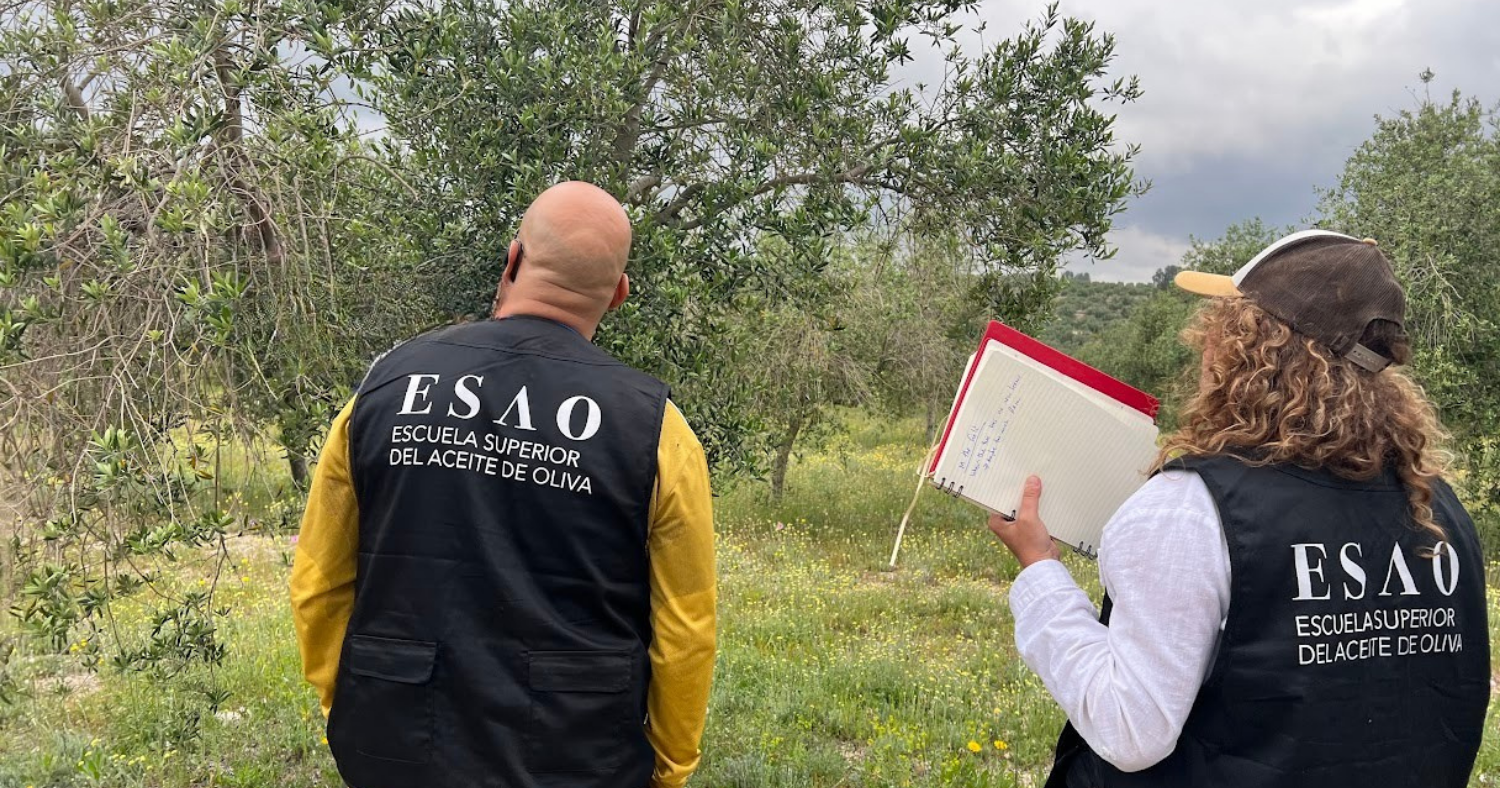
Source: Field visit in Enguera during ESAO’s in-person training Starting a business in the olive oil sector not only requires having a good oil and a clear commercial strategy. Legal compliance in the olive oil sector is a determining factor for a brand to operate safely, avoid penalties, and access international markets, especially when starting an olive oil business or launching your EVOO brand.
In addition, if you want to deepen your understanding of how to structure and validate a profitable project within the sector, you can consult this guide on olive oil sector business plan, where strategies for viability, commercialization, and business development for EVOO brands are analyzed.
In this article, we review the main legal and regulatory aspects that every entrepreneur should know before launching an extra virgin olive oil (EVOO) business, both nationally and internationally, taking into account the legal requirements in the olive oil sector and the viability of an EVOO business.
1. Health registration and basic authorizations
Any company that wants to produce, bottle, or commercialize EVOO must be registered in the Food and Food Companies Health Registry (RGSEAA). This is the first mandatory step to operate in Spain and the European Union and a key part of developing a solid EVOO business plan.
Key points:
- Obtain prior authorization from health authorities.
- Comply with facility requirements regarding hygiene and safety.
- Have a self-monitoring plan based on HACCP (Hazard Analysis and Critical Control Points).
Entrepreneurs outside Spain must identify the equivalent system in their country. In some cases, there is a national registry, while in others regional bodies grant authorization. Without this step, the business lacks legal backing and directly affects the EVOO profitability analysis.
2. Olive oil labeling regulations
Labeling is one of the most sensitive aspects of legal compliance in the olive oil sector and essential for EVOO packaging and labeling. The EU regulates in detail what must appear on every EVOO bottle, and the same applies in international markets.
Mandatory information includes:
- Product category: “Extra virgin olive oil”.
- Geographical origin.
- Batch identification.
- Best-before date.
- Nutritional information and allergens.
If an entrepreneur wants to export to the U.S., Japan, or China, labels must be adapted to local requirements. For example, in the United States compliance with FDA regulations is required, while in Asia it is common to translate all information into the official language of the importing country.
A labeling mistake can lead to penalties or product withdrawal, one of the main mistakes when launching an EVOO brand.
3. Quality and purity standards
There are chemical and sensory parameters that determine whether an oil can be labeled as extra virgin. Exceeding certain acidity, peroxide, or sensory defect limits means losing the category.
Recommendations:
- Carry out regular analyses in accredited laboratories.
- Maintain traceability records that guarantee oil purity.
- Avoid misleading practices such as undeclared oil blending.
At an international level, some countries apply their own quality standards in addition to those recognized by the International Olive Council. Entrepreneurs must ensure they know the limit values in their target market, especially if they aim to develop a premium EVOO brand.
4. Certifications and protected designations of origin
Although not always mandatory, certifications and protected designations of origin (PDO, PGI) provide added value and legal security, which are fundamental for an EVOO market study.
Advantages:
- Differentiation in premium markets.
- Access to specific grants and promotional programs.
- Strengthening consumer trust.
In international markets, a European organic certification may not be sufficient: the U.S. requires the USDA Organic seal, and in Arab countries the Halal certificate may be mandatory to access certain distribution channels.
5. Labor and field safety requirements
An olive oil business also involves managing agricultural and mill labor.
Key legal aspects:
- Employment contracts and Social Security registration.
- Occupational risk prevention in the field and the olive mill.
- Compliance with collective agreements and minimum wages.
Entrepreneurs in Latin America, for example, will find labor regulations very different from European ones. Each entrepreneur must study national agricultural employment legislation to avoid legal or reputational issues.
6. Environmental and waste regulations
The olive oil sector is increasingly regulated in terms of sustainability and environmental impact.
Common obligations:
- Proper management of olive wastewater and pomace.
- Compliance with waste discharge and emission regulations.
- Obtaining environmental licenses for facilities.
In some countries, environmental regulations may even be stricter than in Spain. Australia, for example, imposes very clear protocols for waste management in agricultural operations.
7. Export and international trade
If the goal is exportation, legal compliance in the olive oil sector expands to include the requirements of each country. This is where the biggest differences appear, and every entrepreneur must analyze the regulatory framework of their target market, together with their EVOO digital marketing strategy and participation in EVOO trade fairs.
International examples:
- U.S.: compliance with FDA regulations, USDA Organic certifications for organic products, and specific labeling requirements.
- European Union: harmonized regulations, but strict border controls and digital traceability requirements.
- Asia: in China and Japan, exporter company registration is required and, in many cases, certified label translation.
- Arab countries: the need for Halal certification to enter supermarkets and institutional channels.
- Latin America: variable tariffs and, in some countries, mandatory local health registration even if the product is certified at origin.
The most important thing is for every future entrepreneur to understand that there is no single global regulation. Each country has its own rules, and if they are ignored, the oil may be blocked at customs or rejected by distributors, affecting exit strategies and the possibility of attracting investors for your EVOO business.
Conclusion
Legal compliance in the olive oil sector should not be seen as an obstacle, but as a guarantee of professionalism and trust for customers and consumers. Complying with regulations from the beginning allows businesses to grow safely and access international markets.
An entrepreneur who wants to launch an EVOO brand must understand that each market has its own legal framework and that it is their responsibility to study it. In Spain, Europe, the U.S., or Asia, legal compliance is just as important as oil quality.
An entrepreneur who invests in legal advice and proper regulatory management is building a brand with solid foundations and long-term potential.
Important note
This article is for informational purposes only and does not replace professional legal advice. Each project must be analyzed in detail according to its characteristics and the regulations in force in both the country of origin and destination.
In the ESAO Executive MBA – Olive Oil Consultant, you will learn how to strategically manage legal compliance in the olive oil sector, with an international perspective that will allow you to adapt your brand to the requirements of each market.